
European jet fuel supply tightens as Hormuz disruption cuts imports
European jet fuel supply is coming under pressure as reduced Middle East flows lift prices and raise concern over aviation inventories before summer demand.
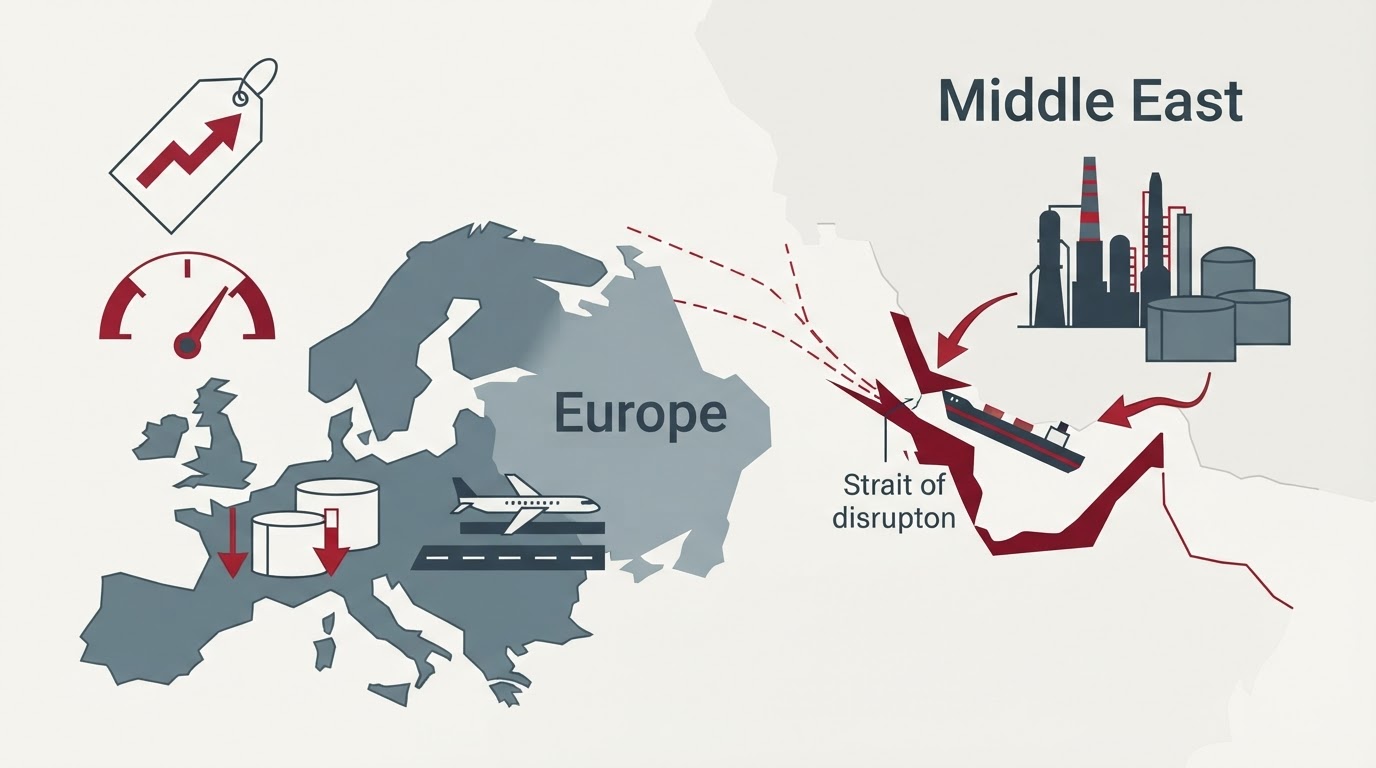
European jet fuel supply is tightening as the disruption to shipping through the Strait of Hormuz restricts deliveries from the Middle East. Vortexa expects European imports to fall to 420,000 barrels per day this week, 40% below the previous week and the lowest level recorded since March 2022. The pressure is emerging as airlines prepare for the northern hemisphere’s peak summer travel period.
Middle East flows to Europe fall
Before the conflict involving Iran, about 40% of Europe’s jet fuel supply moved through the Strait of Hormuz. Shipments from the Middle East have since declined by as much as 90%. Lars van Wageningen, research manager at Insights Global, said the region could face a material supply shortage within weeks. Analysts have warned that continued inventory depletion may lead airlines to reduce European short- and medium-haul services by the end of April.
The European Union and UK are exposed because they source product from refineries in the Persian Gulf. Asian markets have been affected earlier because of their dependence on crude normally transported through Hormuz, while reduced Middle Eastern feedstock availability has also forced some Asian refineries to lower production. Global kerosene and jet fuel output is expected to decline by about 600,000 barrels per day in March from February, equivalent to roughly 7%.
Jet fuel prices have reached record levels and, in some cases, have doubled since the beginning of the year. The increase has exceeded gains in crude and several other refined products. Willie Walsh, director-general of the International Air Transport Association, said airlines would need to recover the higher expense through increased ticket prices. Some carriers have also adopted round-trip fuelling, loading additional product at their departure airport to avoid constrained supplies at their destination, although the extra weight raises consumption.
Airlines reduce schedules as governments protect stocks
Vietnam Airlines plans to suspend 23 domestic flights each week from 1 April because of limited Jet A-1 inventories. Air New Zealand has cancelled about 1,100 domestic services, while China has curtailed fuel exports to preserve domestic availability. South Korea is considering redirecting export volumes into its home market. Philippine President Ferdinand Marcos Jr has said the grounding of aircraft is a realistic possibility if the situation persists. United Airlines has meanwhile begun cancelling routes regarded as insufficiently profitable amid higher costs.
Global demand for jet fuel and kerosene averaged about 7.8 million barrels per day last year. International Energy Agency members have agreed to release around 400 million barrels from strategic inventories, although most of that volume is crude and historically only a limited share of emergency releases reaches aviation. An estimated 37 million barrels of jet fuel and kerosene could be removed from the global market if Hormuz remains closed.
Vikas Dwivedi, global energy strategist at Macquarie Group, said flight capacity cannot be maintained if fuel availability declines. Even if the waterway reopens soon, restoring trade flows, adjusting refinery yields and rebuilding airline schedules could take weeks or months. The market is therefore likely to remain dependent on inventories, refinery operating decisions and demand reductions while supply chains are re-established.
Source attribution
Original reporting by the Europe Commodities newsroom.
Newsletter
Europe Commodities — Market & Trade Briefing
A concise briefing on commodity, energy, fuel oil and shipping developments across European trading hubs. Free, and you can unsubscribe at any time.