
Lloyd's Register Approves 12,500 Cbm LNG Bunker Vessel Design
Classification society Lloyd's Register has granted design approval for a 12,500 cubic metre capacity liquefied natural gas bunker vessel.
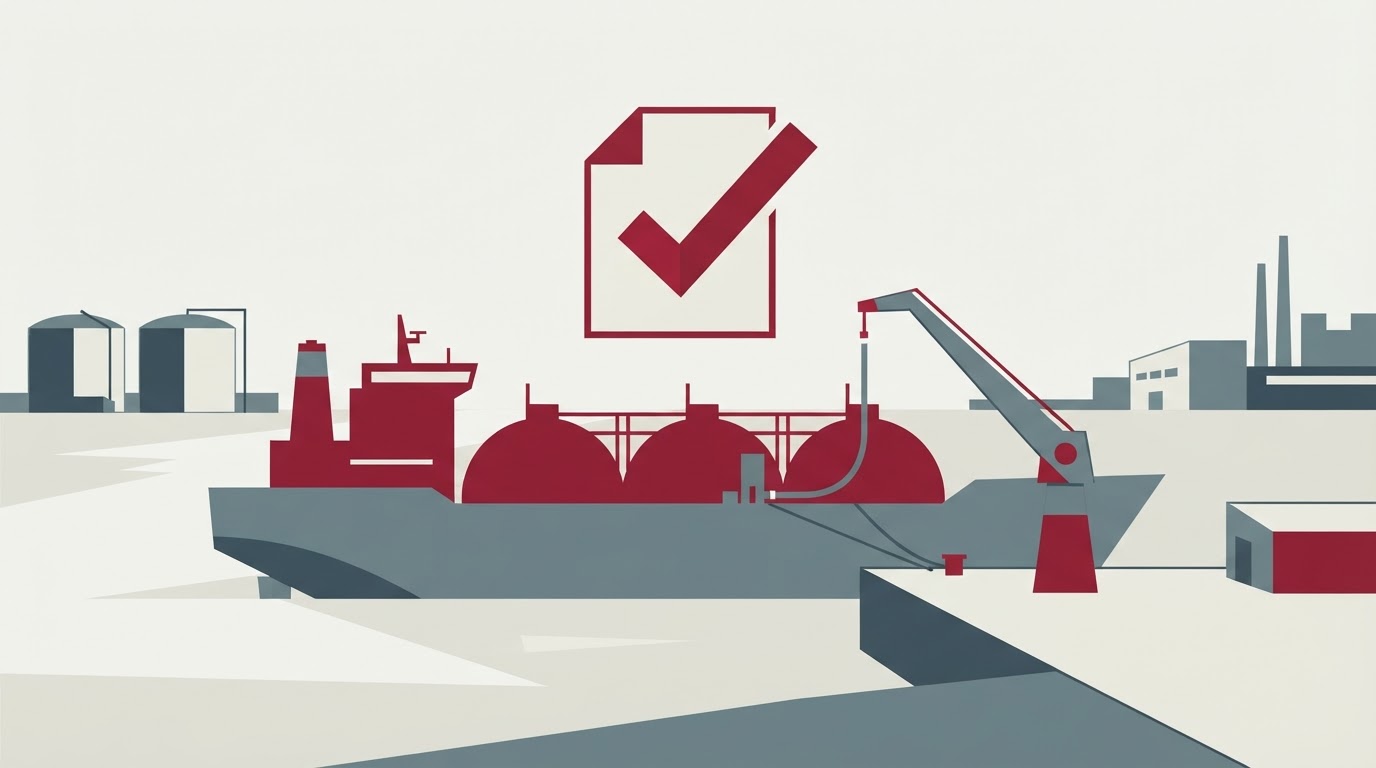
Classification society Lloyd's Register has granted formal design approval for a 12,500 cubic metre capacity liquefied natural gas bunkering vessel, marking another technical milestone in the expansion of alternative marine fuel delivery infrastructure.
The approval confirms that the vessel design satisfies the required technical criteria, maritime safety standards, and operational rules established for dedicated liquefied gas fuel supply tonnage. Classification verification forms a critical stage in the progression of marine engineering concepts toward commercial construction and active deployment.
With a cargo capacity of 12,500 cubic metres, the vessel design occupies an increasingly strategic segment in marine fuel logistics. Tonnage of this scale provides the capacity required to deliver multi-thousand-tonne bunker stems to deep-sea container ships, car carriers, and bulk vessels in major shipping hubs, while retaining the manoeuvrability necessary for port and coastal operations.
The formal clearance from Lloyd's Register provides shipowners, project developers, and shipbuilders with technical assurance regarding structural integrity, gas handling systems, containment, and safety arrangements. Design appraisal by an established international classification society is essential to demonstrate compliance with international gas carrier codes and bunkering safety protocols.
As the global fleet of gas-fuelled merchant vessels continues to expand, specialized supply infrastructure remains central to fleet operating flexibility. The progression of mid-scale bunker vessel designs through classification society review reflects ongoing technical development across the maritime gas supply sector.
Source attribution
Original reporting by the Europe Commodities newsroom.
Newsletter
Europe Commodities — Market & Trade Briefing
A concise briefing on commodity, energy, fuel oil and shipping developments across European trading hubs. Free, and you can unsubscribe at any time.